

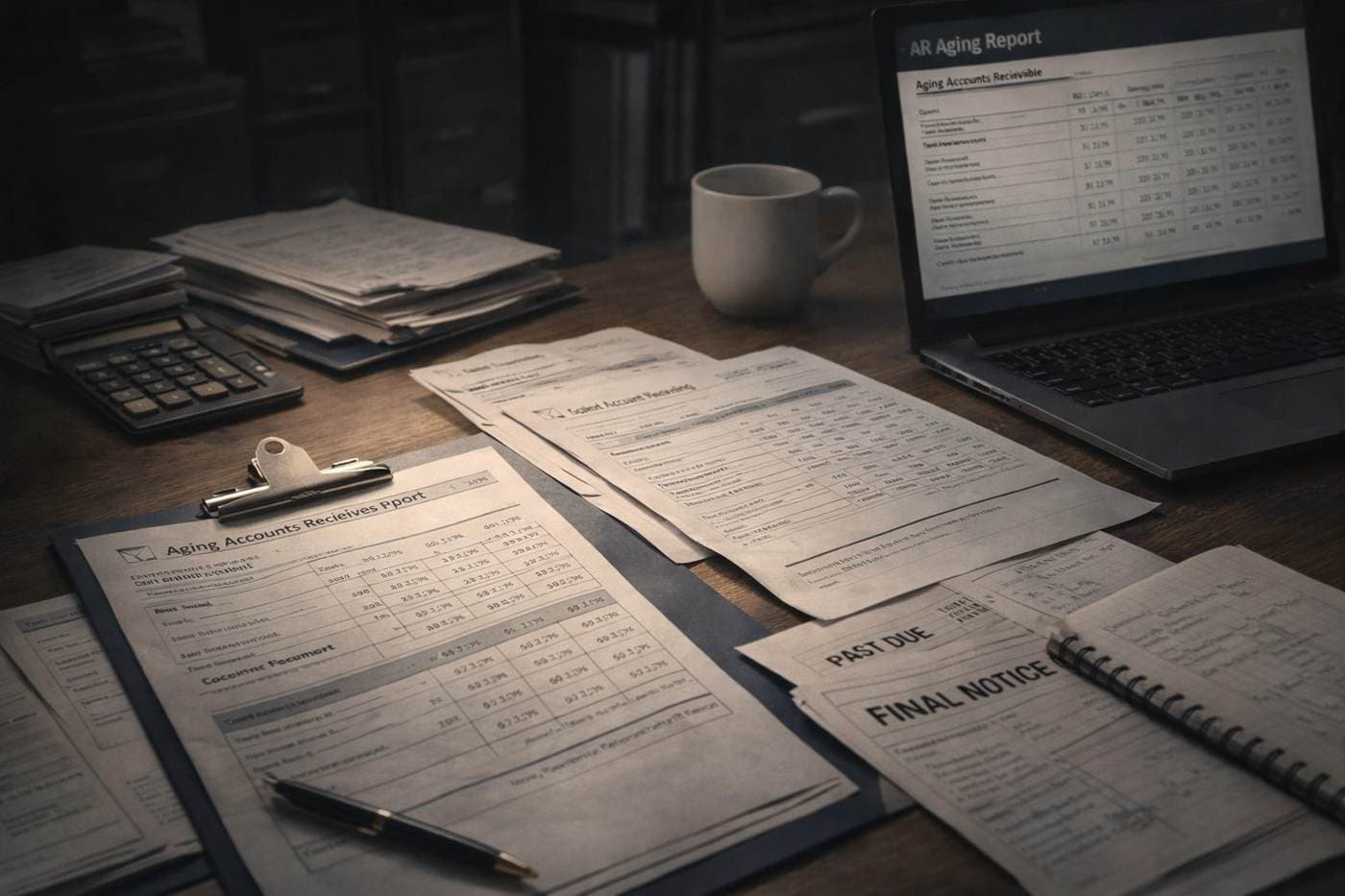
The Short Answer
It is a promise. And after closing, you inherit the quality of that promise.
If receivables are stale, disputed, concentrated, or tied to weak-credit customers, your “working capital” can evaporate the second you take over.
Key Insight
Accounts receivable surprises after closing a small business acquisition occur when receivables that looked like cash on the balance sheet turn out to be stale, disputed, concentrated in weak-credit customers, or tied to informal collection practices that only worked because the seller knew the customers personally. The most common post-close A/R traps include receivables aged beyond 90 days that the seller had not written off, customer balances tied to verbal agreements rather than documented terms, concentration where a handful of accounts represent the majority of the receivable balance, and credit policies that were never formalized. Buyers who do not age the A/R, verify payment terms, and stress-test collection probability before close inherit working capital risk that can create immediate cash pressure. The practical rule is to treat any receivable older than 60 days as a collection project rather than an asset, and to negotiate working capital targets that explicitly define what qualifies as collectible.
This issue is especially nasty because it rarely looks dramatic in the CIM. It usually shows up as a tidy A/R balance that nobody has pressured hard enough.
Why Buyers Miss This
Receivables feel reassuring.
The seller says:
- “There’s
$180Kin A/R.” - “Customers always pay.”
- “It’s just timing.”
Then you close and learn:
- a chunk is over 90 days
- one customer is disputing invoices
- another only paid because the seller personally chased them
- the business has terrible credit discipline
That is how buyers inherit working capital problems disguised as assets.
What Bad A/R Actually Tells You
Bad receivables are usually not an isolated accounting issue.
They often signal:
- weak collections discipline
- customer quality problems
- disputes over service or product quality
- poor billing systems
- concentration risk
- a seller smoothing over cash-flow problems
In other words, ugly A/R often points to deeper operational sloppiness.
The Four Things to Check
1. Aging
Ask for the A/R aging report.
Break it into:
- current
- 30 days
- 60 days
- 90+ days
If a meaningful share sits in the older buckets, stop calling it healthy working capital.
It may still collect. It may also be fantasy with invoices attached.
2. Concentration
If a large piece of A/R belongs to one customer, you have two risks:
- collection risk
- concentration risk
That customer is not just controlling revenue. They may be controlling your near-term cash.
3. Bad Debt History
Ask how much gets written off each year.
If the seller says “basically none,” but the aging report looks ugly, someone is lying to themselves or to you.
4. Credit Policy
How does the business decide who gets terms? Who approves exceptions? How aggressive is collections follow-up?
If the answer is basically “the owner knows who’s good for it,” that is not a credit policy. That is vibes.
Example: Why This Blows Up After Close
A B2B service business shows:
$1.1Mannual revenue$240KSDE$170Kof A/R at closing
Looks fine.
Then you dig:
$55Kis over 90 days$40Kbelongs to one shaky customer$25Kis tied to disputed service work- the owner personally handled collections for the top accounts
So the buyer did not inherit $170K of near-cash.
They inherited a pile of maybes.
Now layer in debt service, payroll, and a working capital target that assumed those invoices were good.
That is how “solid cash flow” turns into a nasty first-quarter surprise.
What to Ask Before You Close
Ask for:
- detailed A/R aging
- bad debt write-off history
- credit memos and disputed invoices
- top receivable balances by customer
- payment terms by major account
- collections process and who owns it
Then ask the obvious follow-ups:
- Which balances are truly collectible?
- Which customers always pay late?
- Which receivables only get paid when the owner chases them?
- Are any large balances tied to one-off work or unresolved issues?
If you want the broader financial review lens, read financial statements that matter when buying a business.
Why This Is Really a Working Capital Problem
Receivables are not just a finance line. They are a cash timing issue.
If your cash conversion is weak right after close, three things happen fast:
- payroll still hits
- vendors still want payment
- your margin for error disappears
That is why working capital language in the purchase agreement matters. A seller should not get full credit for receivables that are technically booked but economically weak.
This is also why price vs terms is not theoretical. Structure is how you defend yourself when the asset quality is softer than the headline suggests.
Yellow Flag or Deal Killer?
Usually a yellow flag
- some slow-paying accounts, but strong collection history
- a few old invoices with clear explanation
- slightly messy credit policy in an otherwise stable business
Can become a deal killer
- large stale balances with no support
- disputed invoices being treated like clean assets
- one customer driving too much of A/R
- owner-dependent collections
- bad debt history that was hidden or minimized
Sometimes this is a pricing issue. Sometimes it is a structure issue. Sometimes it is a walkaway issue.
Final Take
Receivables are only valuable if they convert to cash on time and at the expected amount.
If they are stale, concentrated, disputed, or owner-dependent, they are not a clean asset. They are a warning.
Do not buy A/R at face value just because it appears on the balance sheet.
Pressure it. Age it. Concentrate it. Then decide what it is actually worth.
FAQ
Why is A/R risky after buying a business?
Because receivables may be old, disputed, concentrated, or dependent on the seller’s relationships to collect. That can create immediate post-close cash stress.
What A/R report should I ask for?
Ask for a detailed aging report, top balances by customer, bad debt history, and notes on disputed or slow-paying accounts.
Is A/R included in working capital?
Usually yes, but the economic quality of that A/R matters more than the accounting balance.
When does bad A/R become a deal problem?
It becomes a real deal problem when large balances are stale, doubtful, or critical to the cash-flow assumptions supporting the acquisition.
Disclaimer
This article is for informational purposes only and does not constitute financial, legal, or investment advice. Always consult with a qualified professional before making any acquisition decisions.

Avery Hastings, CPA
Founder, Acquidex • CPA • Tokyo, Japan
Avery Hastings is a CPA based in Tokyo, Japan and the founder of Acquidex. She focuses on helping buyers evaluate small-business deals with clear cash-flow logic, realistic downside analysis, and practical diligence frameworks.
Keep up with Avery →Sources
No external sources are cited in this article.
Keep Reading
- How Do You Look Up a Business's SBA Loan History Before You Buy It?8 min read read
- Who Actually Steals From Small Businesses, and Why It Matters When You Buy One8 min read read
- Customer Contracts in an Acquisition: The Four Clauses That Decide What They're Worth14 min read read
- When Did the Owner Last Take Three Weeks Off? The Cheapest Diligence Question There Is7 min read read
- Who Does the Customer Call at 7pm? The Relationship Map Most Buyers Skip8 min read read
- How to Verify a Seller's Growth Story: Four Checks, and the One That Killed Mine15 min read read